• Offer for Industry
  • Young GI
  • Patients
  • Press
  • Newsletter
  • Contact us
UEG Connect
Create myUEG account
  • About
    • To landing page
      • Who we are
      • Boards, Committees & Groups
      • Governance
      • Headquarters Management
      • History
      • What we do
      • Strategic Drivers
      • Year in Review
      • Our Members
      • Specialist Member Societies
      • National Member Societies
      • UEG Community
      • UEG Associates
      • UEG Connect
      • Women in GI
      • Young GIs
      • Researchers
      • Event Calendar
  • Week
    • To landing page
      • Congress Resources
      • UEG Week Recordings ↗
      • CME Accreditation
      • Future UEG Week
      • Programme
      • Postgraduate Teaching
      • Industry
      • Supporters
  • Education
    • To landing page
      • Gutflix - Learning Platform ↗
      • Online Courses ↗
      • Mistakes in... ↗
      • UEG Podcast ↗
      • Webinars ↗
      • Summer School
      • Masterclass
      • Gut Guide
      • Career Development
      • CME in Europe
      • Supporters
  • Research
    • To landing page
      • Horizon Europe Support
      • Start-up Grant
      • Research Projects
      • HoloSurge
      • Intercept
      • InfoGut COST Action
      • White Book 2
      • Main Results
      • Full Reports
      • Materials and Presentations
  • Quality of Care
    • To landing page
      • Search Guidelines ↗
      • Non-English Guidelines
      • How to Develop Guidelines ↗
      • Quality of Care Initiatives
      • Quality Indicators
  • Public Affairs
    • To landing page
      • News
      • Focus Areas
      • Advocacy Toolbox
      • Stakeholder Collaboration
      • Digestive Health Month
      • Position Papers
      • Advocacy Bulletin
      • #EUNewsline
      • MEP Digestive Health Group
  • Publications
    • To landing page
      • Congress Publications
      • Research Publications
      • Public Affairs Publications
      • Education Publications
      • UEG Publications
      • UEG Journal ↗
      • UEG Journal Podcast ↗
  • Opportunities
    • To landing page
      • Top Abstract Prizes
      • National Scholar Award
      • Travel Grants
      • International Scholarship Awards
      • Research Prize
      • Research Fellowship
      • Lifetime Achievement Award
      • Journal Best Paper Award
      • Activities Endorsement
      • Rising Star Awards
      • Clinical Visiting Fellowships
      • Open Positions
      • Talent Pool
  • Gutflix ↗
  • Offer for Industry
  • Young GI
  • Patients
  • Press
  • Newsletter
  • Contact us

Elevating digestive health on the EU agenda: UEG’s vision for a healthier future

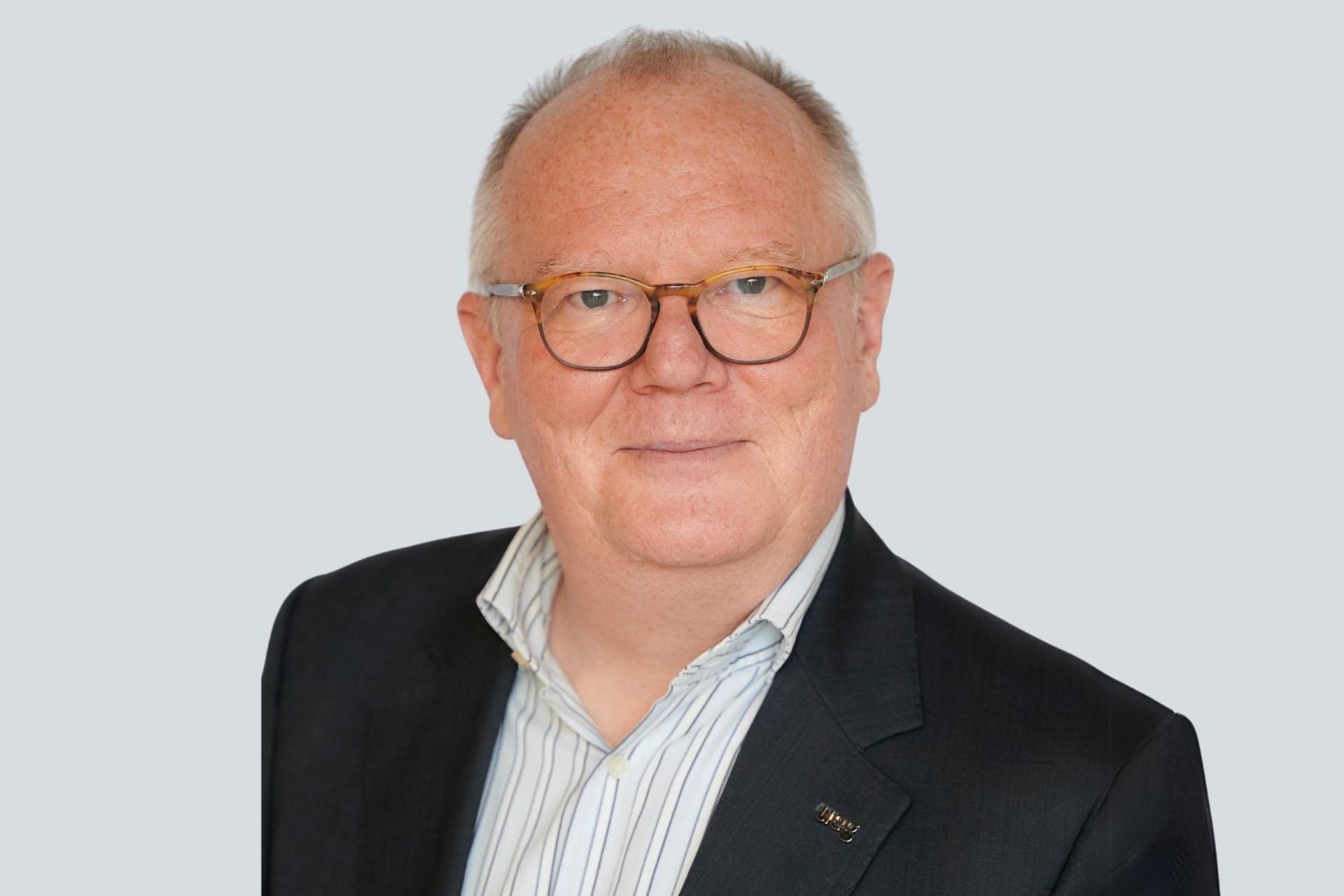
May 27, 2024 | Matthias Löhr – President, United European Gastroenterology (UEG)

As we mark World Digestive Health Day this year under the theme “Prioritising Your Digestive Health”, it is an opportune moment for us to reflect on the importance of digestive heath and our future priorities, both on personal levels and as a wider society.  

This reflection is particularly significant in the context of the imminent European Elections, where elected officials will set agendas that influence the direction of healthcare over the next five years. This presents a crucial opportunity for us to collaborate and advocate for the elevation of digestive health on the EU agenda.  

Why do digestive diseases deserve attention?  

Our recent pan-European study, the White Book 2, explored the profound impact of digestive diseases across 44 European countries, revealing alarming statistics regarding their burden and economic toll.1 In 2019 alone, nearly 500,000 lives were lost and over 330 million prevalent cases of digestive diseases were recorded, indicating a steady increase since 2000. 

Unfortunately, despite their significant and escalating burden, the study also emphasised the marked lack of attention they receive in terms of policy, funding and research. This inaction underscores the clear risk of the situation deteriorating further if we do not direct our efforts towards measures that enhance digestive health.  

Our recommended priorities for the next EU mandate   

In response to these latest findings, we are calling for a stronger health policy environment aimed at reducing the burden of digestive diseases across Europe. Here, we are committed to collaborating with policymakers to implement the following six policy interventions over the next five years:  

Promote early prevention strategies: Establishing healthy nutritional and lifestyle practices from infancy, including exclusive breastfeeding for the first six months, gradual introduction of allergenic foods, and limitation of highly processed foods, is vital for lifelong digestive health.2 Educational initiatives delivered through healthcare systems and community platforms that promote healthy behaviours, alongside national policy action such as restricting unhealthy food and beverage advertising, are urgently required. This is especially important given the increasing rates of childhood obesity seen across Europe, with one in three children now classed as overweight or obese.3   

Target risk factors: The White Book 2 identified the most prevalent risk factors associated with digestive diseases, including alcohol use, smoking and high body mass index (BMI). For liver cancer alone, for example, up to 54% of the proportion of age-standardised disability-adjusted life years (DALYs) were associated with alcohol use, 26% with smoking and 25% with a high BMI across Europe.1 To address this, interventions to reduce exposure to these risk factors are imperative. Implementing measures such as the mandatory labelling of food and alcohol products and the launching of impactful public education campaigns against smoking, are crucial steps we must take.  

Address health inequalities: The growing burden of digestive diseases has been accompanied by widening health disparities across Europe, with the increase disproportionately affecting socioeconomically disadvantaged groups.1 Proposed interventions must be designed to tackle these inequities and address the multifaceted barriers individuals encounter in adopting a healthy lifestyle.  

Employ cancer screening: Cancer screening plays a pivotal role in preventing or detecting diseases early when treatment is most effective. Notably, for colorectal cancer, mortality rates have seen a decline across Europe between 2000 to 2019, due in part, to the roll-out of population-based screening programmes.1 We are therefore urging the EU to promote stronger national policies on the risk-based detection of colorectal, liver and gastric cancers, as well as enhanced research into pancreatic cancer screening methods, to ensure comprehensive cancer prevention efforts.  

Prioritise data collection: In 2019 alone, the direct and indirect costs of digestive diseases reached approximately €25 billion and €89 billion respectively across Europe.1 However, this cost analysis does not paint a full picture, as the cost of digestive cancers remains largely unknown in most European countries. This implies that the actual total cost is significantly higher. The retrieval of further economic data at national levels is required to enable nations to make informed and effective decisions on cost-effective spending in relation to digestive diseases.  

Evaluate funding priorities: Notable disparities persist between the burden of many digestive diseases and the level of funding they receive. For instance, irritable bowel syndrome (IBS), affecting 10-15% of the European population, received just €1.7 million in Horizon 2020 funding.1, 4 Similarly, conditions disproportionately impacting disadvantaged groups, such as alcohol-related liver disease, remain underfunded in comparison to their burden.1 It is therefore essential to address these disparities in funding programmes and priorities to ensure equitable allocation based on disease burden.  

Our vision for UEG’s role in the next EU Health agenda 

Recognising the urgent need for collaborative action among policymakers, healthcare professionals, researchers and society at large to advance digestive health outcomes, UEG is committed to making a meaningful contribution to the EU health agenda through the following avenues:  

Policy advocacy and lobbying: Leveraging our dedicated Public Affairs Group and engagement with the MEP Digestive Health Group, we continuously advocate for policies that prioritise digestive health. Looking ahead, we aim to strengthen our collaborations with incoming MEPs and hope the new legislature will bring in health champions committed to our cause. Through our current EU elections campaign, we are already working to build and strengthen relationships with policymakers to ensure digestive health remains a key focus in future policy development.5 

Research advancement: As a society, we work tirelessly to advance research in the field and secure funding for a diverse array of disease areas and associated projects that have the potential to improve patient outcomes. Demonstrating this commitment, I am proud to share details of our first collaboration under the Horizon European Framework, the HoloSurge project consortium. In this partnership, European scientists and clinicians will work together to develop an AI-based medical system that enhances surgical precision by offering real-time, holistic views of patient’s anatomy and pathology during operations. The overarching goal is to elevate outcomes for cancer treatments.    

Professional development and training: With education as one of our key pillars, we are dedicated to taking a central role in delivering cutting-edge medical education to the digestive health community. Our annual flagship event, UEG Week, provides unparalleled access to the highest quality research and educational offerings, empowering healthcare professionals to stay up to date with the latest evidence-based guidelines and best practices to ensure their widespread adoption across Europe.  

Public awareness and education: Through awareness raising initiatives like Digestive Health Month every May and ongoing collaborations with patient organisations, we aim to actively identify knowledge gaps within the general public and patient populations. By doing so, we can contribute towards the development and dissemination of accurate information and resources that encourage individuals to take proactive steps towards improving their digestive health.  

A healthier future for Europe involves us all!  

For too long, digestive diseases have not received the attention they deserve, despite their significant and growing burden. At UEG, we are advocating for change over the next five years, which can only be achieved through a collective effort by our European health community to implement our policy recommendations.  

Together, we can pave the way to a brighter future for digestive health. 

Social Sharing
  • Notes to Editors
  • References
Notes to Editors

Notes to Editors  

For further information, please contact Luke Paskins at [email protected].

We kindly ask that a reference to UEG is included when communicating any information within this article.  

About UEG 

Founded in 1992 United European Gastroenterology (UEG) is the leading non-profit organisation for excellence in digestive health in Europe and beyond with its headquarters in Vienna. We improve the prevention and care of digestive diseases in Europe through providing top tier education, supporting research and advancing clinical standards. As Europe’s home for multidisciplinary gastroenterology, we unite over 50,000 engaged professionals from national and specialist societies, individual digestive health experts and related scientists from all fields. With our innovative online platform, the myUEG Community, we enable digestive health professionals from across the globe to connect and benefit from a plethora of outstanding free resources and educational activities. Our offers include UEG Week, our annual congress, online and face-to-face educational experiences, research support, a scientific journal and a range of opportunities in the form of fellowships and grants. We provide numerous guidelines, standards and quality improvement initiatives and campaign at the European level to ensure continued resources for research into digestive health while working closely with patient organisations. 

Find out more about UEG’s work by visiting www.ueg.eu or contact Luke Paskins at [email protected].
References
  1. UEG (2023). Burden, economic impact and research gaps: Key findings from the Pan-European study on digestive diseases and cancers. Retrieved from https://www.nxtbook.com/ueg/UEG/burden-economic-impact-and-research-gaps/index.php.
  2. Shamir, R. (2023). Let’s start from the beginning: A healthy gut from day 1. European Medical Journal. Retrieved from https://www.emjreviews.com/gastroenterology/article/lets-start-at-the-beginning-a-healthy-gut-from-day-1/?site_version=EMJ.
  3. World Health Organization (2023, May 10). 1 in 3 children in the WHO European Region is living with overweight or obesity. Retrieved from https://www.who.int/europe/news/item/10-05-2023-1-in-3-children-in-the-who-european-region-is-living-with-overweight-or-obesity.  
  4. Quigley, E. M., Bytzer, P., Jones, R., & Mearin, F. (2006). Irritable bowel syndrome: The burden and unmet needs in Europe. Digestive and Liver Disease, 38(10), 717-723. https://doi.org/10.1016/j.dld.2006.05.009.
  5. UEG. (2024). EU Elections 2024. Retrieved from https://ueg.eu/public-affairs/eu-elections-2024.

Comment

Please log in with your myUEG account to post comments.

Latest Articles
Press Release
Europe must embed patient voices to transform digestive health outcomes, urges new UEG manifesto
Press Release
Microplastics found to change gut microbiome in first human-sample study
Press Release
Artificially sweetened and sugary drinks are both associated with an increased risk of liver disease, study finds
Press Release
Europe faces rising liver cancer epidemic without urgent prevention and early detection measures
Get our newsletter!
Sign up with your email to receive UEG news and updates. We respect your privacy.

Headquarters Management

United European Gastroenterology

Wickenburggasse 1
1080 Vienna, Austria


T: +43 1 997 1639

UEG Week Registration

Mondial Congress & Events

Official UEG Week Registration Partner
Operngasse 20b
1040 Vienna, Austria


T: +43 1 58804 - 0

More

Imprint

Terms & Conditions

Media Policies

Privacy Policy

Change cookie-settings

Social Media

7 767 Followers

23 000 Followers

15 666 Followers

5 866 Followers

3 670 Subscribers

11 399 Subscribers

65 Subscribers

409 Subscribers

UEG copyright 2025. All rights reserved. Use of this website constitutes acceptance of the Privacy Policy and Terms & Conditions.