
Dr Christen Rune Stensvold is a Senior Scientist and Public Health Microbiologist with specialty in parasitology. He has a Bachelor degree in Medical Sciences, an MSc in Parasitology, and a PhD in Health Sciences. He has been based at Statens Serum Institut, Copenhagen, since 2004. Since 2006, he has authored/co-authored more than 80 articles in international, peer-reviewed scientific journals. In 2013, he was awarded the Fritz Kauffmann Prize for his contribution to clinical microbiology in Denmark. For many years, he has been pursuing the role of common intestinal micro-eukaryotes in human health and disease. Follow Rune on Twitter @Eukaryotes.
The third-leading cause of cancer-related mortality worldwide, colorectal cancer (CRC), is largely associated with lifestyle and diet. Indeed, it has been estimated that up to 60% of CRC can be prevented through dietary and lifestyle changes.1 The role of dietary fibre in the prevention of CRC has been subject to scrutiny, particularly so for some of the metabolites derived from the breakdown of insoluble fibre by colonic bacteria.
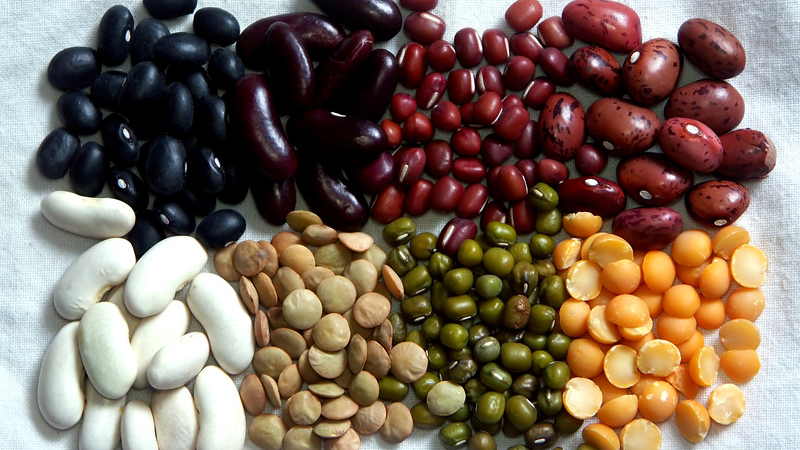
Dietary fibre, especially that known as ‘resistant starch’ (found in, for example, peas, beans, seeds and grains, but also in potatoes that have been cooked and cooled), might assist in CRC prevention by bulking luminal contents and speeding up gastrointestinal transit, which reduces the exposure of the colonic epithelium to toxic compounds, such as nitrosamines stemming from charred meat.2,3 Moreover, bacterial fermentation of fibre in the colon leads to the production of short-chain fatty acids (SCFAs). One such SCFA is butyrate, which is a major provider of energy to healthy colonocytes. Cancerous colonocytes, on the other hand, prefer glucose to butyrate as an energy source and may therefore accumulate butyrate in the nucleus due to inefficient metabolism of the molecule (a process referred to as the Warburg effect3,4). In such cancerous cells, butyrate serves as an epigenetic regulator of gene expression: non-metabolized butyrate inhibits histone deacetylase (HDAC), leading to reduced cell proliferation and apoptosis. 2–4 Known as the butyrate paradox,4 this contrasting and apparently highly beneficial role of butyrate has stimulated research into the aetiology, prevention and treatment of CRC in the context of dietary fibre, microbiota and SCFAs.
Controlling for factors such as differences in host genetics, microbiota diversity and differences in fibre type, Donohoe and colleagues used mouse models to show that fibre exerts its tumour-suppressive effect in a manner that is dependent on both microbiota and butyrate.2
Hu et al. showed that rats with induced colitis-associated CRC that were fed a diet containing 10% resistant starch had decreased tumour multiplicity and adenocarcinoma formation compared with rats that received a control diet. These findings suggest that a diet rich in insoluble fibre may prevent or reduce the development of colitis-associated CRC.5 Several studies using different technologies have independently shown that the gut microbiota of patients with CRC differ from the gut microbiota of healthy individuals in terms of butyrate-producing bacteria.2,3,5,6
Apart from inhibiting HDAC, butyrate may exert its pro-apoptotic and anti-proliferative activities in tumour cells by several additional cellular pathways. The role of butyrate in colonic function in general and the potential mechanisms by which butyrate lowers colorectal oncogenesis in particular, including the multitude of genes and proteins involved in the anti-tumorigenic effects of the molecule, have been reviewed elsewhere.1,7
A diet rich in resistant starch may per se induce beneficial changes in the microbiota, including an increased number of fibre-fermenting bacteria.5 A diet selecting for butyrate-producing bacteria might conceivably prevent and maybe even alleviate or treat CRC; however, in some individuals, increasing consumption of resistant starch does not result in the expected rise in faecal SCFA levels, suggesting that their microbiomes are less capable of fermenting the fibre.8 Meanwhile, as already alluded to in a previous blog post [https://www.ueg.eu/education/latest-news/article/article/ruminations-on-gut-fermentation-any-link-to-ibs/], the use of faecal butyrate levels as an index of colonic fibre fermentation and butyrate availability in the colon should be interpreted with caution. Nevertheless, the potential of manipulating the microbiota with a view to enriching beneficial bacteria using prebiotics and probiotics, or along the lines of faecal microbiota transplantation, will probably be a major future research focus.
Unsurprisingly, research into the relevance of synthetic HDAC inhibitors as an epigenetic therapy for CRC is expanding.9,10 However, the use of such a strategy, with the disadvantageous systemic effects of HDAC inhibitors,11 needs to be balanced against the targeted use of foods fortified with butyrate derivatives and/or gut microbiota manipulation.3
Studies on the use of faecal microbiota as a biomarker tool for detection of early-stage CRC are also emerging, with one published in 2014 showing a metabolic shift from fibre degradation in tumour-free individuals to utilization of host carbohydrates and amino acids in CRC patients.12 I hope to be able to provide an update on this particular topic in a future blog post!
References
- Fung KY, Cosgrove L, Lockett T, et al. A review of the potential mechanisms for the lowering of colorectal oncogenesis by butyrate. Br J Nutr 2012; 108: 820–831. http://journals.cambridge.org/action/displayAbstract?fromPage=online&aid=8687811&fulltextType=RV&fileId=S0007114512001948
- Donohoe DR, Holley D, Collins LB, et al. A gnotobiotic mouse model demonstrates that dietary fiber protects against colorectal tumorigenesis in a microbiota- and butyrate-dependent manner. Cancer Discov 2014; 4: 1387–1397. http://cancerdiscovery.aacrjournals.org/content/4/12/1387.abstract
- Bultman SJ. Molecular pathways: Gene–environment interactions regulating dietary fiber induction of proliferation and apoptosis via butyrate for cancer prevention. Clin Cancer Res 2014; 20: 799–803. http://clincancerres.aacrjournals.org/content/20/4/799.abstract
- Donohoe DR, Collins LB, Wali A, et al. The Warburg effect dictates the mechanism of butyrate-mediated histone acetylation and cell proliferation. Mol Cell 2012; 48: 612–626. http://www.cell.com/molecular-cell/abstract/S1097-2765(12)00777-0
- Hu Y, Le Leu RK, Christophersen CT, et al. Manipulation of the gut microbiota using resistant starch is associated with protection against colitis-associated colorectal cancer in rats. Carcinogenesis. Epub ahead of print 19 February 2016. DOI: 10.1093/carcin/bgw019. http://carcin.oxfordjournals.org/content/early/2016/02/28/carcin.bgw019.abstract
- Wu N, Yang X, Zhang R, et al. Dysbiosis signature of fecal microbiota in colorectal cancer patients. Microb Ecol 2013; 66: 462–470. http://onlinelibrary.wiley.com/doi/10.1111/j.1365-2036.2007.03562.x/abstract
- Hammer HM, Jonkers D, Venema K, et al. Review article: the role of butyrate on colonic function. Aliment Pharmacol Ther 2008; 27: 104–119. http://onlinelibrary.wiley.com/doi/10.1111/j.1365-2036.2007.03562.x/abstract
- McOrist AL, Miller RB, Bird AR, et al. Fecal butyrate levels vary widely among individuals but are usually increased by a diet high in resistant starch. J Nutr 2011; 141: 883–889. http://jn.nutrition.org/content/141/5/883.abstract
- Mottamal M, Zheng S, Huang TL, et al. Histone deacetylase inhibitors in clinical studies as templates for new anticancer agents. Molecules 2015; 20: 3898–3941. http://www.mdpi.com/1420-3049/20/3/3898
- Tampakis A, Tampaki EC, Nebiker CA, et al. Histone deacetylase inhibitors and colorectal cancer: what is new? Anticancer Agents Med Chem 2014; 14: 1220–1227. http://www.eurekaselect.com/124741/article
- Dawson MA, Kouzarides T. Cancer epigenetics: from mechanism to therapy. Cell 2012; 150: 12–27. http://www.cell.com/cell/abstract/S0092-8674(12)00762-3
- Zeller G, Tap J, Voigt AY, et al. Potential of fecal microbiota for early-stage detection of colorectal cancer. Mol Syst Biol 2014; 10: 766. http://msb.embopress.org/content/10/11/766.long
Social Sharing
-
About the Author
About the Author



Please log in with your myUEG account to post comments.