Dr Rui Castro is currently a Principal Investigator at the Research Institute for Medicines (iMed.ULisboa), Portugal. He completed his PhD at the University of Lisbon and the Department of Medicine (GI Division), University of Minnesota Medical School, USA, in 2006. Since then, Dr Castro has been combining his background on the modulation of liver cell function with his most recent discoveries in the miRNA field, to answer key questions on liver physiology and pathophysiology, while supervising both undergraduate and postgraduate students under the GI umbrella. In 2015, he was selected as a UEG Rising Star. Follow Rui on Twitter @RuiCastroHD.
Blog
Highlights of the ESPGHAN Pediatric Hepatology Summer School 2014
December 16, 2014 | Rui Castro
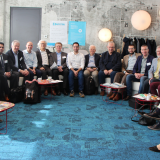
ESPGHAN aims to promote the health of children, focusing on the gastrointestinal tract, liver and nutritional status. Since its foundation in 1968, ESPGHAN has been engaging scientific exchange among trainees, young doctors and scientists involved in paediatric gastroenterology, hepatology and nutrition, by means of summer schools, research forums and workshops. The 2014 Pedriatric Hepatology Summer School, which was organized by Professor Pietro Vajro and the ESPGHAN Hepatology Committee, focused on the latest multidisciplinary approaches for the diagnosis and management of paediatric hepatobiliary disorders.
Several recordings from this year’s Pedriatric Hepatology Summer School are now available in the UEG Education library. They include state-of-the-art lectures, specifically tailored for the paediatric hepatologist, on: liver development, anatomy and biology by Professor Stefania Nori;1 liver function tests by Doctor Valerio Nobili;2 and gene therapy for inherited liver diseases by Professor Nicola Brunetti-Pierri.3
Also featured is a collection of recordings on cholestasis, introduced by Professor Thierry Lamireau.4 He explains that cholestasis is thought to affect between 1/2,500 to 1/5,000 neonates, being much more frequent in premature babies, with causes being extrahepatic, intrahepatic or even both. Intrahepatic cholestasis can be triggered by infection or by a wide range of genetic, metabolic and endocrinological factors. In his presentation, Professor Lamireau showcases step-by-step practical biological and clinical procedures for the diagnosis and treatment of each pathology.5 In turn, biliary atresia is the main pathology leading to extrahepatic cholestasis. Professor Björn Fischler illustrates disease pathogenesis and the multiple problems associated with the currently available surgical treatment for extrahepatic cholestasis, highlighting the importance of screening procedures for early diagnosis.6 So, how should cholestasis be managed? Professor Fischler addresses this issue, starting by outlining the consequences of ongoing cholestasis, namely the lack of bile acids in the gut and the retention of toxic hydrophobic bile acids in the liver, and then moving on to the specific management of cholestasis and malnutrition, as well as cholestatic pruritus.7
At the 2014 Summer School, Dr Alex Knisely hosted an interactive voting session on clinical cholestasis cases.8 He introduced the special problems in early life that may lead to cholestasis and the challenges of taking biopsy samples in young infants, before moving to the presentation and discussion of five different clinical cases based on biological and biochemical analyses, as well as liver biopsies.
Dr Danièle Pariente’s presentation provides an extended and comprehensive overview of paediatric hepatology imaging modalities, namely ultrasonography, computed tomography and magnetic resonance imaging.9 She addresses each modality’s advantages and drawbacks, as well as indications and limits, in parallel with the presentation of clinical cases. Dr Pariente then goes on to define the imaging strategies in neonates and children in cases of cholestasis (with practical examples on cholelithiasis, choledochal cysts, neonatal cholestasis, biliary atresia); portal hypertension (extrahepatic portal vein obstruction, wedged cirrhosis, congenital hepatic fibrosis, obliterative portal venopathy and Budd-Chiari Syndrome); and liver tumors (hepatoblastoma; hepatic hemangioma; focal nodular hyperplasia; adenomas).
In the final presentation from this series, Professor Fischler discusses hepatitis B, highlighting the large prevalence of this disease in children, particularly in developing and more-heavily populated countries.10 He also considers the challenges of effective vaccination as a preventative measure. Four clinical cases are presented and discussed.
If you’d like to discover more paediatric hepatology content from ESPGHAN, please feel free to browse the UEG Education Library, which includes presentations from the ESPGHAN 2013 Summer School and Liver Conference, as well as its 46th Annual Meeting, also held in 2013.
Presentations at ESPGHAN Pediatric Hepatology Summer School 2014
- Nori S. The liver and the hepatobiliary tree: Development, anatomy and biology issues for the pediatric hepatologist.
- Nobili V. Common LFTs in pediatric Hepatology.
- Brunetti-Pierri N. Gene therapy for inherited liver diseases.
- Lamireau T. Cholestasis: Generalities.
- Lamireau T. Focus on INTRA-hepatic cholestasis.
- Fischler B. Focus on EXTRA-hepatic cholestasis.
- Fischler B. Cholestasis: Management.
- Knisely A. Clinical Cases and Interactive Voting Session.
- Pariente D. Interactive Overview in Pediatric Hepatology Imaging.
- Fischler B. Chronic Viral Hepatitis B.
Social Sharing
-
About the Author
About the Author
Please log in with your myUEG account to post comments.