
Dr Christen Rune Stensvold is a Senior Scientist and Public Health Microbiologist with specialty in parasitology. He has a Bachelor degree in Medical Sciences, an MSc in Parasitology, and a PhD in Health Sciences. He has been based at Statens Serum Institut, Copenhagen, since 2004. Since 2006, he has authored/co-authored more than 80 articles in international, peer-reviewed scientific journals. In 2013, he was awarded the Fritz Kauffmann Prize for his contribution to clinical microbiology in Denmark. For many years, he has been pursuing the role of common intestinal micro-eukaryotes in human health and disease. Follow Rune on Twitter @Eukaryotes.
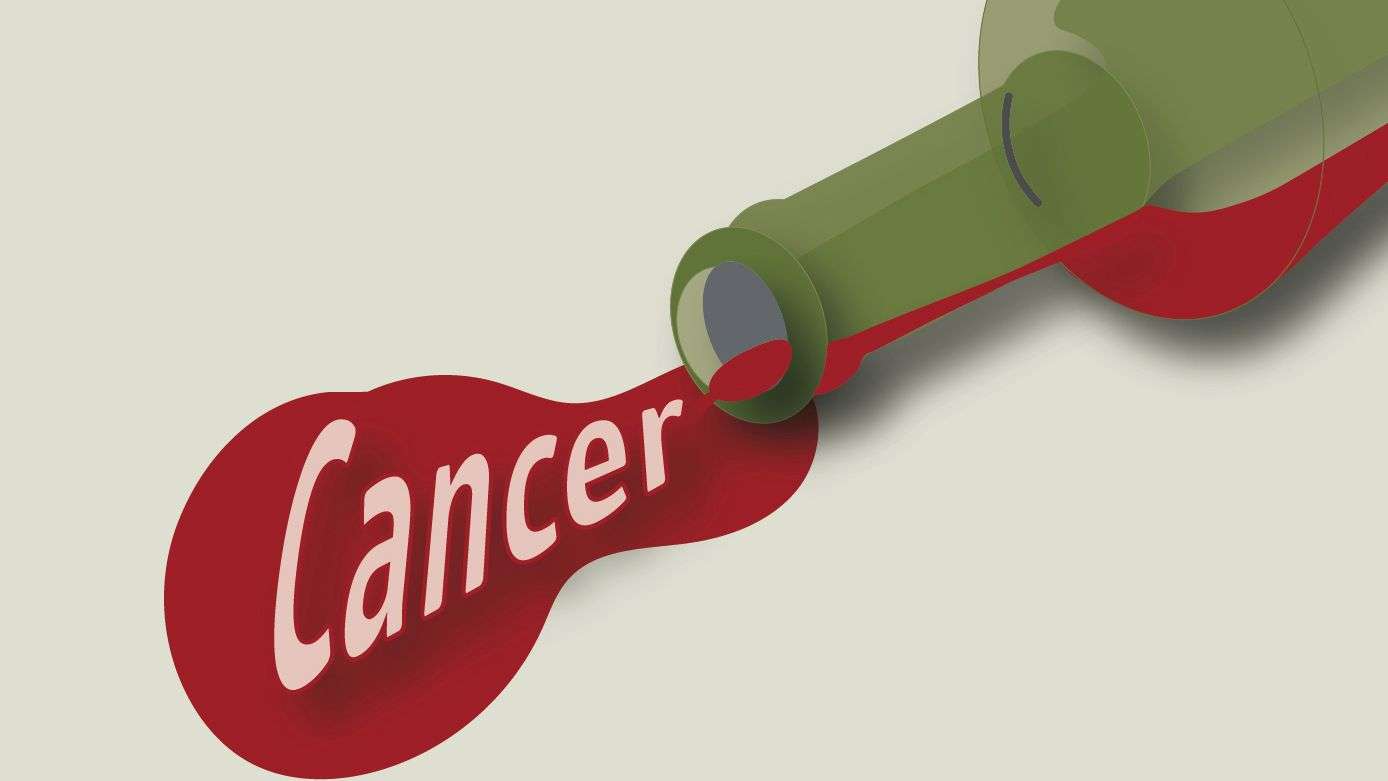
In the ‘European Code Against Cancer', the International Agency for Research on Cancer (IARC) identify 12 ways to reduce the risk of developing cancer, one of which has to do with alcohol consumption.1 Indeed, the Code advises “If you drink alcohol of any type, limit your intake. Not drinking alcohol is better for cancer prevention.” This recommendation is perhaps not surprising given that alcohol has been identified as a cause of at least seven types of cancer, most of which are gastrointestinal (i.e. cancer of the mouth, pharynx, oesophagus, liver, colon and rectum).1
Working with clinical microbiology and microbiome analysis on a daily basis, I’m interested in the use of gut microbiota profiling for predicting human health and disease, including relationships between microbes and cancer. Dysbiosis and predominance of particular gut microbiota communities are thought to be involved in the development of, for example, colorectal cancer (CRC).2–4 But to what extent might alcohol consumption drive or modify such relationships? There may be several answers to this question, and, as exemplified by a recent study, they may not be black and white…5
In their study, Tsuruya et al. investigated the ecophysiological consequences of alcoholism on human gut microbiota.5 Detailing and corroborating the findings of others,6 they found that the gut microbiota of alcoholics were depleted in dominant obligate anaerobes (e.g. Ruminococcus) and enriched in aerotolerant (facultative anaerobic) groups, including Streptococcus and other minor species. That the distribution is skewed towards facultative anaerobes in alcoholics reflects—at least in part—the influence of oxidative stress due to ethanol-induced formation of reactive oxygen species by, for example, gut mucosal cells.
The team go on to explain how the different major groups of bacteria metabolize ethanol under different ecological circumstances, which includes the production of acetaldehyde (the carcinogenic metabolite derived from alcohol that is thought to be critical to the development of ethanol-related CRC). While I strongly encourage you to acknowledge the complexity of these intricate relationships, what I find particularly intriguing is the extent to which it is possible to predict gut ecology (e.g. the level of oxidative stress) by microbiota profiling, since this could impact the way we manage and prevent cancers such as CRC.
Strong epidemiological data suggest there is a dose–response relationship between alcohol consumption and the risk of CRC.7–10 And when it comes to alcohol (ab)use and the risk of developing and dying from CRC, it might be useful to look not only at the gut bacteria that are present and what they do, but also at those bacteria that are absent. For instance, the diet of individuals who consume excessive amounts of alcohol might favour gut microbiota changes that increase susceptibility to cancer development. Some bacteria produce short-chain fatty acids (SCFAs), which are most likely protective against the development of CRC.4,11 Such bacteria are established in the gut typically in relation to a diet rich in fibre. If the overall diet of alcoholics promotes (e.g. via malnutrition) a reduction in bacteria producing SCFAs, this could indirectly lead to an increased CRC risk.
The possible opportunities here are manifold, but I will end by mentioning what I consider the two most important ones. First, microbiota profiling can be used as a noninvasive diagnostic/prognostic marker for various aspects of health and disease; stool analysis might in the future enable us to tell if a patient is an alcoholic, what type of food they eat (if you include profiling of eukaryotic cells in stool as well), and what the likelihood of, for example, CRC is in this patient. Second, microbiota manipulation—through diet, antibiotics, or gut microbiota transplantation—may be used with a view to reducing morbidity and mortality from cancer, not only CRC, but possibly also other types of cancer.
References
- International Agency for Research on Cancer. European Code Against Cancer (https://cancer-code-europe.iarc.fr/index.php/en/) (accessed March 21, 2017).
- Gagnière J, Raisch J, Veziant J, et al. Gut microbiota imbalance and colorectal cancer. World J Gastroenterol 2016; 22: 501–518. https://www.ncbi.nlm.nih.gov/pmc/articles/PMC4716055/
- Dulal S and Keku TO. Gut microbiome and colorectal adenomas. Cancer J 2014; 20: 225–231. https://www.ncbi.nlm.nih.gov/pmc/articles/PMC4589167/
- Vipperla K and O’Keefe SJ. Diet, microbiota, and dysbiosis: a ‘recipe’ for colorectal cancer. Food Funct 2016; 7: 1731–1740. http://pubs.rsc.org/en/Content/ArticleLanding/2016/FO/C5FO01276G#!divAbstract
- Tsuruya A, Kuwahara A, Saito Y, et al. Ecophysiological consequences of alcoholism on human gut microbiota: implications for ethanol-related pathogenesis of colon cancer. Sci Rep 2016; 6: 27923. http://www.nature.com/articles/srep27923
- Mutlu EA, Gillevet PM, Rangwala H, et al. Colonic microbiome is altered in alcoholism. Am J Physiol Gastrointest Liver Physiol 2012; 302: G966–978. http://ajpgi.physiology.org/content/302/9/G966
- Bailie L, Loughrey MB and Coleman HG. Lifestyle risk factors for serrated colorectal polyps: a systematic review and meta-analysis. Gastroenterology 2017; 152: 92–104. http://www.gastrojournal.org/article/S0016-5085(16)35028-4/abstract
- Wang YM, Zhou QY, Zhu JZ, et al. Systematic review with meta-analyses: alcohol consumption and risk of colorectal serrated polyp. Dig Dis Sci 2015; 60: 1889–1902. http://link.springer.com/article/10.1007%2Fs10620-014-3518-3
- Bagnardi V, Rota M, Botteri E, et al. Alcohol consumption and site-specific cancer risk: a comprehensive dose-response meta-analysis. Br J Cancer 2015; 112: 580–593. http://www.nature.com/bjc/journal/v112/n3/full/bjc2014579a.html
- Cai S, Li Y, Ding Y, et al. Alcohol drinking and the risk of colorectal cancer death: a meta-analysis. Eur J Cancer Prev 2014; 23: 532-539. http://journals.lww.com/eurjcancerprev/pages/articleviewer.aspx?year=2014&issue=11000&article=00007&type=abstract
- Bultman SJ. Interplay between diet, gut microbiota, epigenetic events, and colorectal cancer. Mol Nutr Food Res 2017; 61. http://onlinelibrary.wiley.com/doi/10.1002/mnfr.201500902/abstract
P.S. CRC awareness month takes place every March. Visit the Publications section [ https://www.ueg.eu/publications/] of the UEG website to view several infographics on CRC, including one on ‘Alcohol and colorectal cancer’, or read the press release ‘Change through concrete policies: the case of EU alcohol policies and subsequent healthcare savings’ to find out more about the mortality attributable to major alcohol-attributable diseases, such as cancer and liver cirrhosis, and the strategy developed by the EU with a view to reducing alcohol-related morbidity and mortality.
Social Sharing
-
About the Author
About the Author




Please log in with your myUEG account to post comments.